9 hr
Bogotá Coffee Farm & Tequendama Falls Day Trip
Explore a working coffee plantation and witness Colombia's stunning 132-meter waterfall on this full-day escape from the capital.
Reserve
Hand-picked by our editors — only the best 5 coffee farm tours from 47 reviewed
Verified partners for every tour, free cancellation where available, and instant confirmation on every booking.
9 hr
Explore a working coffee plantation and witness Colombia's stunning 132-meter waterfall on this full-day escape from the capital.
Reserve
9 hr
Journey into the Andean foothills to meet campesina growers, harvest beans, and taste coffee brewed the traditional way
Reserve
10 hr
Harvest cherries, roast beans, and taste world-class Colombian coffee on a family farm in Cundinamarca
ReservePrices from verified partners. Availability updates in real time at checkout. Free cancellation policies apply where shown.
The landmarks, rooms, and views travelers on this tour remember — all visible on a single visit.
The building is a former hotel constructed in the early 20th century, showcasing intricate French-style design.
This spot provides an expansive view of the 157-meter drop and the river canyon below.
Learn about the local ecosystem and the environmental restoration efforts of the Bogota River.
Well-maintained areas surrounding the museum offer spaces to rest and enjoy the mountain air.
Tequendama Falls provides a dramatic encounter with natural topography, while an immersive coffee farm tour from bogota offers a deep dive into the region's agricultural heritage. Choosing between them depends on whether you prioritize geological landmarks or hands-on cultural participation.
| Feature | Top pick Tequendama Falls | Coffee Farm Tour |
|---|---|---|
Primary focus |
Geology and history | |
Travel time from Bogota |
1.5–2 hours | |
Physical activity level |
Low to moderate | |
Educational content |
Architectural and historical context | |
Sensory experience |
Mist and water sounds | |
Price |
15,000 COP | |
| See tickets → |
Verdict: Select the waterfall for its dramatic landscape, or choose the coffee farm tour from bogota tickets for a comprehensive look at the bean-to-cup production cycle and regional coffee farm tour from bogota tours.
Choose your ticket, select your date, and reserve in under two minutes. Secure checkout handled by our verified partner.
Instant confirmation by email, with a mobile voucher you can save offline. No printing, no queuing at a collection desk.
Arrive at the entrance, show your voucher on your phone, and walk in. Most tickets include priority or skip-the-line access.
Practical details for your visit straight from our verified partners — hours, access, rules, and how to get there.
Bogota City Center
Confirm location with your coffee farm tour from bogota provider
Private transport is the most direct way to reach the waterfall from Bogota.
Hire a driver for a day-long coffee farm tour from bogota.
Wear sturdy walking shoes and layers suitable for changing weather at Tequendama Falls. Rain gear is often necessary for a coffee farm tour from bogota.
Keep personal belongings secure during your coffee farm tour from bogota excursion. Large backpacks may be restricted inside the museum.
Photography is permitted for personal use at the Tequendama Falls House Museum. Capture the mist and architecture during your coffee farm tour from bogota.
The historic building has limited accessibility for visitors with reduced mobility. Contact your coffee farm tour from bogota coordinator to discuss specific needs.
Mobile phones are permitted for photos and navigation. Signal can be inconsistent near the waterfall.
Families are welcome, though children should be supervised near cliff edges and steep terrain. This local landmark offers an educational coffee farm tour from bogota experience.
Carry water and snacks as dining options are limited on-site. Many coffee farm tour from bogota itineraries include a stop for local refreshments.
Pets are generally not permitted inside the museum building. Check with your coffee farm tour from bogota guide regarding vehicle policies.
The entrance fee is 15,000 COP per person. Arriving during your coffee farm tour from bogota by 09:00 helps avoid afternoon fog.
Bogota City Center
Confirm location with your coffee farm tour from bogota provider
Get directionsBest time to go, insider tips, nearby landmarks, and the cancellation fine print — flip through to skim what matters to you.
How crowds, weather, and events shift across the year.
Mild temperatures occur from March to May.
August offers cooler, clearer views for a coffee farm tour from bogota.
Expect higher rainfall and heavier waterfall volume.
Dryer weather facilitates a smooth coffee farm tour from bogota schedule.
Small details that turn a good visit into a great one.
Reach the site at 09:00 to see the falls before the mist rolls in.
Carry enough water for the duration of your coffee farm tour from bogota.
Monitor local forecasts as mountain weather changes rapidly near Tequendama Falls.
Use a lens cloth to clean spray from your camera after viewing the waterfall.
Book a comprehensive coffee farm tour from bogota that includes museum admission.
Non-bookable sights within a short walk — free to visit, easy to pair.
The primary waterfall drop visible from the museum site.
The historic house museum overlooking the waterfall chasm.
Flexible, no hidden fees.
Tickets for the Tequendama Falls House Museum are generally non-refundable as they support preservation. Please verify specific terms with your coffee farm tour from bogota provider.
Hand-picked options within walking distance — pick a district for vibe, or a specific hotel for convenience.
Base your stay in the city for easy coffee farm tour from bogota departures.
Local lodging options located near the waterfall area.
Colombia produces seventeen million bags of Arabica coffee each year, yet fewer than two percent of Bogotá's eight million residents have walked a working plantation. The farms clustered in the municipalities of Choachí, San Antonio del Tequendama, and the eastern Andean slopes lie within ninety minutes of the capital, but the altitude drop from 2,640 metres to 1,800 metres marks a climatic threshold. Here the paramo grasslands yield to cloud forest, and the temperature rises enough for Coffea arabica to thrive. The region's volcanic soil, consistent rainfall, and shade-grown cultivation produce beans with bright acidity and notes of panela, red fruit, and citrus — a profile distinct from the heavier bodies of Huila or Nariño. A coffee farm tour from Bogotá typically departs the city centre between seven and eight in the morning, threading southwest through the Autopista Sur or east via the Bogotá-Villavicencio highway. Most half-day itineraries focus on a single organic or specialty-grade finca, where guides walk visitors through the full production cycle: seedling propagation in shaded nurseries, manual harvesting of ripe cherries, depulping, fermentation in ceramic tanks, sun-drying on raised beds, and hand-sorting before the beans reach the roaster. Full-day tours often pair a plantation visit with a stop at Tequendama Falls, where the Bogotá River plunges 157 metres into a forested gorge. The nineteenth-century Tequendama Falls House Museum, perched above the cataract, opens Saturday and Sunday from 09:00 to 16:00; admission is 15,000 Colombian pesos per person. The farms themselves range from family-run plots of two hectares to cooperative estates covering thirty. Many practice polyculture agroforestry, intercropping coffee with banana, avocado, and nitrogen-fixing legumes to stabilise soil and provide habitat for pollinators and insectivorous birds. Visitors often participate in a cupping session — a formal tasting protocol in which freshly brewed coffee is slurped from a spoon to aerate the liquid across the palate, revealing flavour layers and mouthfeel. Some operators include a traditional lunch prepared with ingredients grown on-site: arepas, fresh cheese, aguapanela, and seasonal fruit. Transport is always included in tour packages, with hotel pickup available from most Bogotá neighbourhoods. Departures run year-round, though the main harvest season stretches from October through January and a smaller mitaca harvest occurs between April and June. The drive itself is part of the experience: the road winds through eucalyptus groves and roadside stands selling arepas and obleas, offering views of the Sumapaz paramo and the distant peaks of the Cordillera Oriental.

"The altitude drop from 2,640 metres to 1,800 metres marks a climatic threshold where paramo yields to cloud forest and coffee thrives."
A step-by-step walkthrough of the visit — what you'll see, how long each stage takes, and the details that matter.
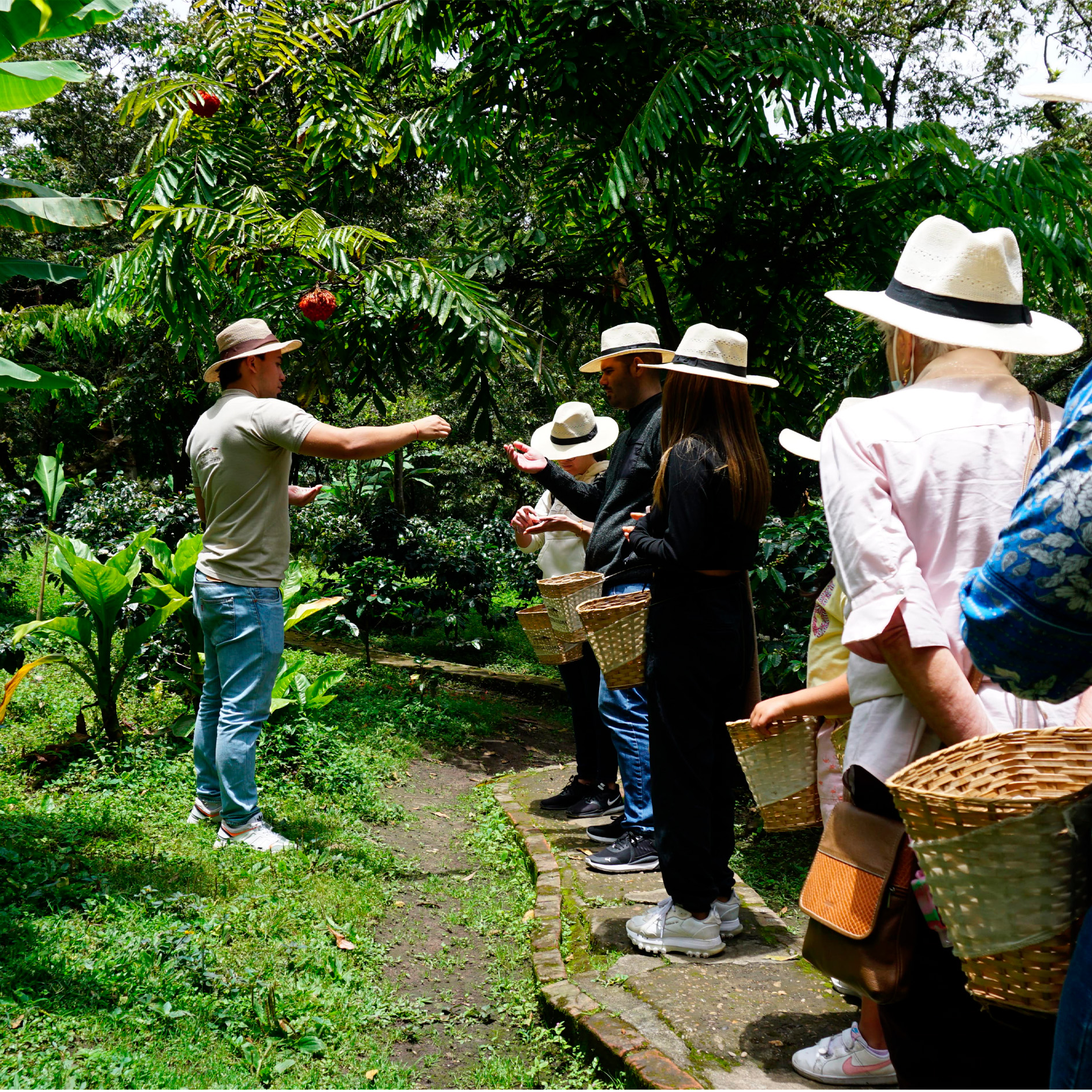
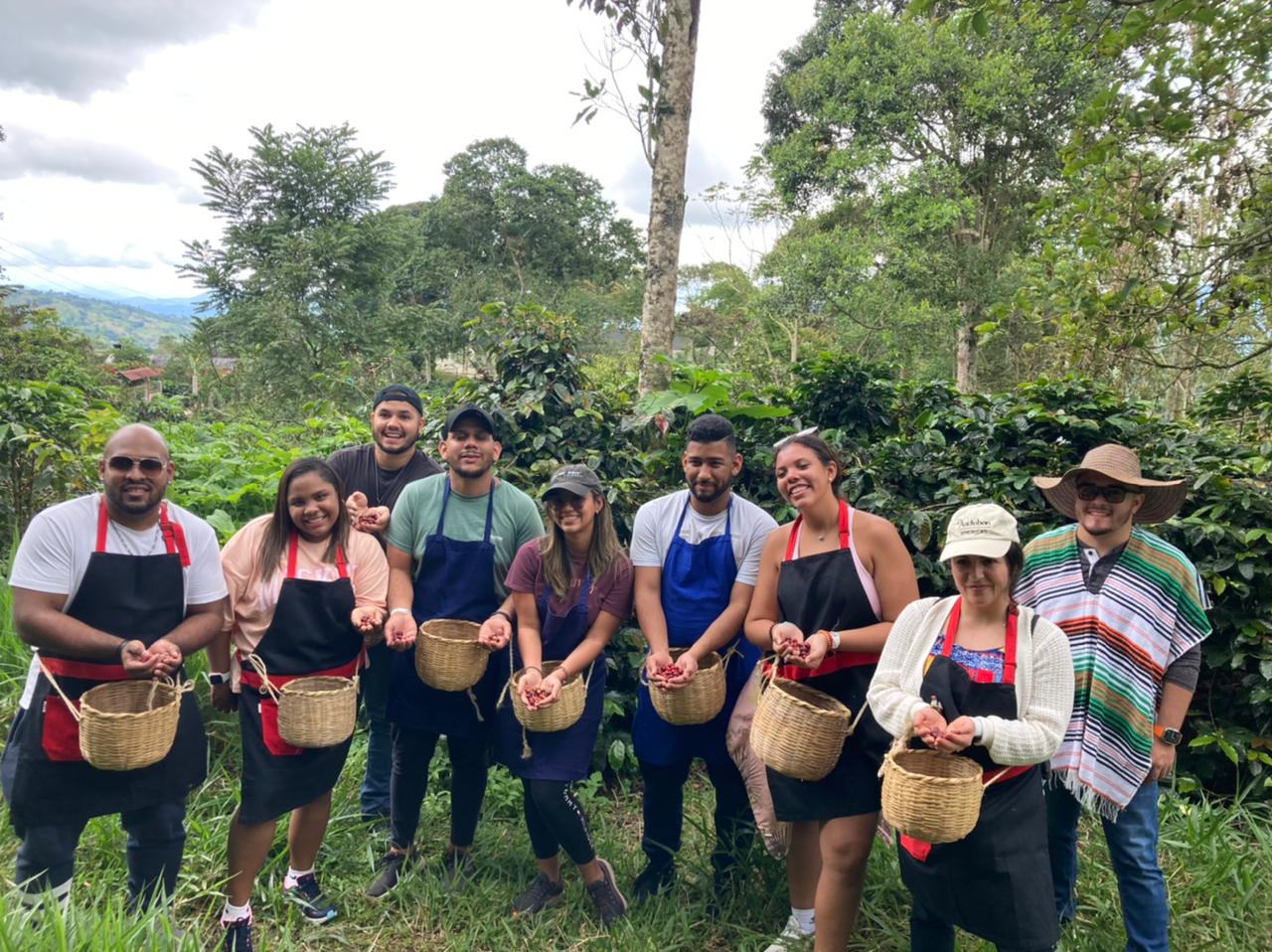
You leave Bogotá as the city wakes, crossing the savanna toward the forested ridges of the Cordillera Oriental. The air cools as the vehicle climbs, then warms again as you descend into the coffee zone. Roadside vendors sell bags of panela and bundles of eucalyptus; mist clings to the hillsides. At the farm, you walk between rows of coffee plants shaded by guamo and banana trees. Your guide hands you a ripe cherry — you squeeze it, feeling the mucilage coat your fingers, and taste the faint sweetness of the pulp. Inside the processing shed, fermentation tanks release a yeasty, vinegar-sharp smell. Beans dry on raised wooden beds, and you run your hands through them, turning the layer so it dries evenly. Later, in the cupping room, you lean over a row of ceramic bowls, slurping coffee from a spoon to coat your palate. You note acidity first, then a lingering sweetness like brown sugar. If your tour includes Tequendama Falls, you arrive mid-morning. The falls roar through a narrow gorge, spray rising into the canopy. You climb the steps to the museum — a French-style mansion from 1923 — and look down at the Bogotá River as it plunges into the cloud forest below. The air smells of wet stone and moss. You return to the capital by early afternoon, a bag of freshly roasted beans in your lap.
The museum is open Saturday and Sunday from 09:00–16:00.
Yes, family members can participate in a coffee farm tour from bogota provided they follow safety guidelines.
The entrance fee is 15,000 COP per person.
Arrive between 09:00–12:00 for the best visibility during your coffee farm tour from bogota.
Photography is allowed, but commercial equipment may require prior permission.
Wear layers and waterproof shoes for your coffee farm tour from bogota and the museum.
Yes, you can reach the museum independently, though many prefer a coffee farm tour from bogota package.
Private transport or a booked tour is the most reliable way to complete your coffee farm tour from bogota journey.
The museum remains open, but the waterfall visibility might be impacted by fog during your coffee farm tour from bogota.